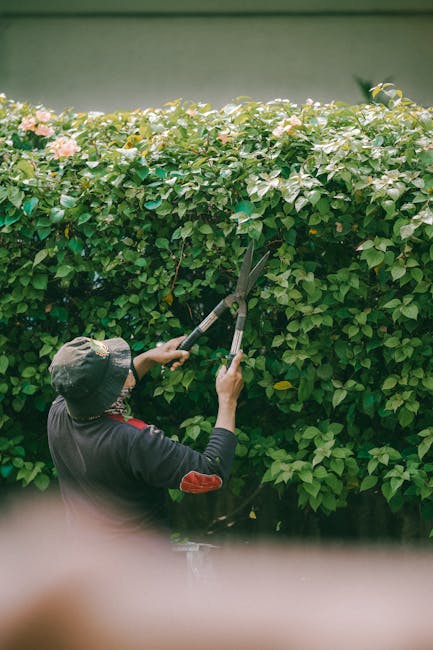
Avoid Hidden Garden Maintenance Costs in Hoxton: A Practical Guide for Homeowners and Landlords
If you have ever agreed a garden tidy-up in spring and then been surprised by the final bill, you are not alone. Hidden charges creep in easily: extra clearance work, waste removal, access issues, emergency repairs, or vague "additional labour" fees that were never properly explained. In a busy part of London like Hoxton, where gardens can be compact, awkwardly accessed, and often a bit overgrown by the time someone gets round to them, those extras can add up fast.
This guide shows you how to avoid hidden garden maintenance costs in Hoxton without making the process complicated. You will learn what to check before work starts, which questions to ask, how pricing usually becomes unclear, and how to compare quotes in a sensible way. The aim is simple: fewer surprises, better value, and a garden that is looked after properly rather than patched up at the last minute.
Table of Contents
- Why It Matters
- How It Works
- Key Benefits and Practical Advantages
- Who This Is For and When It Makes Sense
- Step-by-Step Guidance
- Expert Tips for Better Results
- Common Mistakes to Avoid
- Tools, Resources and Recommendations
- Law, Compliance, Standards, or Best Practice
- Options, Methods, or Comparison Table
- Case Study or Real-World Example
- Practical Checklist
- Conclusion
- Frequently Asked Questions
Why Avoid Hidden Garden Maintenance Costs in Hoxton Matters
Garden maintenance should make life easier, not create a little financial ambush every month. Yet that is exactly what happens when pricing is unclear. You might think you have booked a straightforward lawn cut, but then the contractor adds charges for green waste, strimming edges, pruning "unexpected" growth, or clearing debris that was plainly there in the first place. A small job can suddenly feel much bigger.
In Hoxton, this matters for a few reasons. Properties often sit close together, outdoor space is limited, and access can be awkward through side gates, shared passages, basement steps, or narrow rear entrances. A team may need more time just to move equipment in and out. That does not mean extra charges are wrong, but they should be discussed in advance, not discovered on the invoice like a bad surprise in your inbox on a wet Tuesday morning.
There is also the quality angle. When pricing is transparent, the work usually becomes more disciplined. Everyone knows what is included, what counts as optional, and what needs a separate quote. That helps homeowners, landlords, letting agents, and small businesses make cleaner decisions. Less guessing. Fewer arguments. Better gardens.
Expert summary: The easiest way to control garden maintenance spend is not by chasing the cheapest quote. It is by clarifying the scope, access, waste handling, frequency, and likely add-ons before any tools come out of the van.
How Avoid Hidden Garden Maintenance Costs in Hoxton Works
The principle is straightforward: make the job measurable before you agree to it. A clear quote should describe the actual work, the expected time, the materials or disposal needs, and any conditions that could affect the final price. That is true whether you need regular mowing, hedge trimming, seasonal tidy-ups, or a full clearance.
Hidden costs usually appear when one or more of the following are left vague:
- Scope of work - what exactly is included and what is excluded.
- Garden condition - whether the garden is lightly maintained or heavily neglected.
- Waste removal - whether clippings and debris are taken away or left on site.
- Access - how easy it is to reach the garden and move tools through the property.
- Frequency - whether the service is one-off, weekly, fortnightly, or seasonal.
- Special tasks - things like stump-related work, storm damage, stubborn weeds, or invasive growth.
Think of it as a shared map. If you and the provider are looking at the same map, you can agree where the boundaries are. If not, you may end up paying for work that was never part of the original plan. And yes, the wording on quotes matters more than many people realise. "General garden maintenance" can be a very flexible phrase. Sometimes too flexible.
Good providers usually ask questions early, often before they quote. They may want photographs, a rough description of the size of the space, details about what has been left to grow, and whether there are access limitations. If you want broader service context, it can help to review the provider's services overview before you book. That gives you a better sense of what is likely to be covered and what may need separate agreement.
Key Benefits and Practical Advantages
Saving money is the obvious benefit, but it is not the only one. Clear pricing changes the whole experience. You can plan better, compare options more fairly, and avoid the tension that comes from "I thought that was included."
- Predictable budgeting: You know what the work is likely to cost before the first cut or clearance.
- Cleaner comparisons: Quotes are easier to compare when each one is based on the same scope.
- Less stress: You are not left wondering what the bill will look like after the job is done.
- Better maintenance decisions: Once you understand what drives cost, you can choose between regular upkeep and larger seasonal visits.
- Fewer disputes: Clear expectations reduce friction, which is handy if the property is rented or managed on behalf of someone else.
- More consistent garden health: Regular work is usually cheaper than letting jobs build up into a bigger restoration.
There is a practical side too. A neat, well-kept garden often feels easier to use and easier to live with. You notice it first thing in the morning when the light hits the lawn, or when you step outside for a coffee and the space does not shout for attention. That sounds small, but it matters.
Who This Is For and When It Makes Sense
This approach is useful for anyone paying for outdoor maintenance in Hoxton, but it becomes especially important in a few real-world situations.
Homeowners
If you own a garden and only use a contractor occasionally, hidden costs can catch you out because every visit feels like a one-off. You may not know whether hedge trimming, weed clearance, or waste removal is normally included. That is when written clarity becomes your best friend.
Landlords and letting agents
Rental properties can become awkward when a garden has been left unmanaged between tenancies. A quick tidy may not be enough, and the price can change if the space needs extra labour. If you are responsible for a portfolio or a single flat with outdoor space, regular maintenance is usually simpler than emergency fixes after a tenancy change.
Busy professionals
If you are out all day and only spot the state of the garden at the weekend, it is easy to underestimate what has built up. A small patch of weeds or a slightly shaggy lawn can be a sign that the next visit will need more than a standard cut.
Older homeowners or people managing from a distance
When you are not able to check the garden in person, you need a service that communicates clearly and invoices transparently. No one wants a surprise charge because a job description was assumed rather than confirmed.
In our experience, the moment someone says, "It's probably only a small bit of work," that is exactly when a proper scope conversation is worth having. It does not have to be a big formal thing. Just a sensible one.
Step-by-Step Guidance
Here is a simple way to keep garden maintenance costs under control without turning the whole thing into a project.
- List the work you actually need. Separate mowing, hedge cutting, pruning, weeding, leaf clearance, and waste removal. Don't bundle everything into one vague request.
- Note the garden condition. Is it lightly overgrown, heavily neglected, or somewhere in between? That matters because labour time changes quickly.
- Check access. Measure gates, note side passages, mention stairs, and mention if equipment needs to be carried through the property.
- Ask what is included. Confirm edging, blow-down, green waste handling, and whether a final tidy is part of the price.
- Ask what would trigger an extra charge. This is the key step. Good providers should be able to tell you before the work starts.
- Request the quote in writing. Even a short written note is better than relying on memory. Memory is a slippery thing, to be fair.
- Agree on frequency. One-off jobs are often more expensive per visit than regular maintenance. If the garden needs ongoing care, ask about a scheduled plan.
- Review the invoice promptly. If anything looks unfamiliar, ask for a clear breakdown before paying.
If you are comparing providers, make sure you are looking at the same scope. A lower quote can be misleading if it excludes waste removal or assumes easy access. That is not always a bad quote; it is just not the same job.
Expert Tips for Better Results
These are the little things that save money and hassle in the long run.
Keep a maintenance rhythm
Most gardens cost less when they are maintained consistently. Once growth gets out of control, tasks take longer and waste volume rises. A short, regular visit usually beats a long rescue mission. Not always, but often enough that it is worth planning ahead.
Use photos before quoting
Clear photos can prevent a lot of misunderstanding. Take one wide shot, one close-up of the worst area, and one of access points or side gates. It sounds simple because it is simple.
Separate "maintenance" from "restoration"
Routine maintenance is one thing. Recovering a garden that has been left alone for months is another. Mixing the two is where budgets go wobbly. If a space needs a reset, ask for a separate one-off clearance quote.
Ask about waste before the job starts
Green waste disposal often causes confusion. A pile of clippings may look small on the lawn, but it can become a proper load once collected. Clarify whether it is removed, composted on site, or charged separately.
Be honest about the condition
This one saves everyone time. If the garden has brambles, dense ivy, fallen branches, or heavy leaf build-up, say so. You are not being difficult. You are helping the work get priced properly.
A tiny bit of upfront honesty can save a very non-tiny argument later. That is just reality.
Common Mistakes to Avoid
Most hidden costs come from ordinary mistakes, not dramatic ones.
- Choosing only on headline price. The cheapest quote is not always the best value if it excludes key tasks.
- Not checking waste removal. Clippings, soil, branches, and cuttings may all be treated differently.
- Leaving access details out. Narrow gates and awkward entry paths take time, and sometimes extra labour.
- Assuming "tidy-up" means the same thing to everyone. It rarely does.
- Forgetting seasonal changes. Spring growth, autumn leaves, and storm debris can all shift the workload.
- Skipping the written quote. A verbal agreement can work, but written terms make life much easier.
- Ignoring the condition of hard surfaces. Slippery patios, moss, or loose paving can affect safe working and may require additional care.
One especially common issue: a client asks for "just a quick cut," but the lawn is actually long enough that it needs strimming first, then mowing, then clearing. That's not a scam. It's just a mismatch between expectation and reality. Avoid that mismatch and you are already ahead.
Tools, Resources and Recommendations
You do not need specialist gear to manage garden maintenance costs well, but a few simple tools and habits make a big difference.
- Phone photos: Before-and-after images help you track whether work matches the quote.
- Basic garden notes: Keep a short record of what was done, when, and any extras agreed.
- Seasonal calendar: Mark rough timings for mowing, hedge work, leaf collection, and pruning.
- Comparison checklist: Use the same questions for each quote so you can compare properly.
- Payment method clarity: Confirm how and when payment is taken. If you need more detail on this side of things, the provider's payment and security information is worth reviewing.
For service planning, it can also help to read the company's pricing and quotes page so you know how estimates are structured. And if you want to understand the business background a little better, the about us page can give useful context on how they work and what they prioritise.
If sustainability matters to you, ask how clippings and green waste are handled. The provider's recycling and sustainability information can help you see whether waste is being managed responsibly rather than just hauled away and forgotten.
Law, Compliance, Standards, or Best Practice
Garden maintenance is not usually complicated from a compliance point of view, but there are still sensible standards to keep in mind. Good practice matters here, especially when work involves tools, ladders, waste, or access through shared spaces.
From a customer's perspective, the important things are straightforward:
- Health and safety: Work should be carried out with reasonable care, especially where tools, uneven surfaces, or debris are involved.
- Insurance: It is sensible to ask whether the provider carries appropriate cover for the work they do.
- Clear terms: The job scope, payment expectations, and cancellation or complaint process should be easy to find and understand.
If you are comparing providers, it is reassuring to look at their published health and safety policy and insurance and safety information. That does not remove all risk, of course, but it tells you the business takes the basics seriously.
For the customer side of the relationship, it can also help to read the terms and conditions and the complaints procedure. Nobody enjoys needing them, but knowing they exist is oddly comforting. And yes, that is a very unglamorous bit of due diligence, but it matters.
Options, Methods, or Comparison Table
Different maintenance approaches create different cost patterns. Here is a simple comparison to help you think it through.
| Approach | Best for | Cost predictability | Main risk |
|---|---|---|---|
| One-off tidy-up | Overgrown gardens, pre-letting refresh, seasonal resets | Medium | Extra labour if the garden is worse than expected |
| Regular maintenance visits | Homes and rentals that need ongoing care | High | Less flexible if you only need occasional work |
| Seasonal maintenance plan | Gardens with spring, summer, and autumn peaks | High to medium | May still need extra work after storms or long gaps |
| Ad hoc call-outs | Small jobs or urgent fixes | Low | Higher chance of surprise extras and rushed work |
For most people in Hoxton, regular or seasonal maintenance is the easiest way to keep costs sensible. The garden stays manageable, quotes are easier to set, and everyone spends less time explaining what "just a quick visit" was supposed to mean.
Case Study or Real-World Example
Here is a realistic example, based on the kind of situation many local property owners run into.
A landlord in Hoxton had a small rear garden behind a ground-floor flat. On paper, it seemed simple: mow the grass, remove weeds, and tidy the borders before a new tenant moved in. The first quote looked appealing because it was brief and low. But the garden had not been touched for months, the side access was tight, and the green waste had nowhere easy to go.
After a proper review, the job was split into two parts: a clearance visit and a regular maintenance plan. That changed the initial price slightly, but it also stopped the usual cycle of small surprise charges. No argument over disposal. No guessing about how long it would take. The new tenant arrived to a garden that looked cared for, not rushed.
The lesson is not "always spend more." It is "name the real job." Once the work was properly defined, the costs became controllable. That is the bit people often miss. The quote is not the whole story; the scope is the whole story.
Practical Checklist
Use this checklist before you approve any garden maintenance work in Hoxton.
- Have I described the garden clearly, including size and condition?
- Have I shared photos or access details where helpful?
- Do I know exactly what is included in the quote?
- Do I understand what counts as an extra charge?
- Have we agreed whether waste will be removed or left on site?
- Do I know whether the price is for a one-off job or a recurring visit?
- Have I checked the provider's safety, insurance, and terms information?
- Is the quote written down clearly enough to compare with others?
- Do I know how payment is taken and when it is due?
- Have I thought about whether regular maintenance would be cheaper than repeated call-outs?
If you can tick most of those off, you are in a much better position. Not perfect, maybe, but solid. And solid is exactly what you want here.
Get a free quote today and see how much you can save.
Conclusion
Hidden garden maintenance costs are rarely hidden forever. They show up when the scope is unclear, the garden condition is underestimated, or waste and access are not discussed properly. The good news is that you can prevent most of the pain with a few straightforward habits: ask better questions, get a written quote, separate maintenance from restoration, and keep the work on a sensible schedule.
In Hoxton, where outdoor spaces are often compact and access can be a bit fiddly, clarity is worth more than bravado. A well-defined job is easier to price, easier to complete, and usually better value in the end. That's the real win.
And honestly, once you stop worrying about surprise charges, garden upkeep feels a lot lighter. A bit calmer. A bit more like yours again.
Frequently Asked Questions
What are hidden garden maintenance costs?
They are extra charges that were not clearly explained before the work began. Common examples include waste removal, extra labour for overgrowth, access difficulties, or add-ons that were assumed rather than agreed.
How can I avoid surprise charges for garden work in Hoxton?
Be specific about the work you need, share photos if possible, ask what is included, and get the price in writing. The more clearly the job is defined, the less room there is for surprises.
Is a low quote always the best option?
Not usually. A low quote can be good value, but it may also leave out waste removal, hedge trimming, or other essentials. Compare quotes based on the same scope, not just the headline number.
Should green waste removal be included in the price?
It often should be discussed, yes. Some providers include it by default, while others price it separately. Always check so you know whether clippings and debris are being removed or left behind.
Why do garden quotes change after a site visit?
Because the actual condition of the garden is often different from what was described initially. Overgrowth, poor access, hidden debris, or awkward entry points can change the amount of time and labour needed.
How often should a garden be maintained to keep costs down?
That depends on the garden, but regular maintenance is often cheaper than letting work build up. A simple recurring schedule usually keeps lawns, borders, and hedges under better control.
What details should be on a good garden maintenance quote?
A useful quote should explain the tasks included, the frequency, access assumptions, waste handling, and any likely extras. If those points are missing, ask for clarification before booking.
Do landlords in Hoxton need a different approach?
Often, yes. Rental properties benefit from clearer scheduling and written scope notes because gardens may be used by different tenants over time. That helps reduce disputes and keeps the property presentable.
Can I ask for a maintenance plan instead of one-off visits?
Absolutely. In many cases, a plan is easier to budget for and can reduce the chance of larger one-off costs later. It is especially useful for gardens that grow quickly or are used all year.
What should I do if an invoice includes an unexpected extra?
Ask for a clear breakdown and compare it with the quote or agreed scope. Sometimes the reason is legitimate, but it should still be explained properly. If anything feels unclear, raise it promptly.
Is it worth checking safety and insurance information?
Yes. It gives you confidence that the provider takes the work seriously and has thought about the practical risks involved. You can review the company's insurance and safety information and health and safety policy before you decide.
Where can I ask for a tailored quote?
You can start with the provider's contact page and request a quote based on your garden's size, condition, and access. A tailored quote is usually far more reliable than a generic estimate.